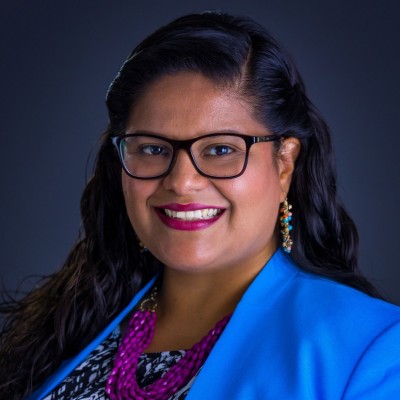
Marla A. Ramírez
Associate Professor, History and Chicanx/e & Latinx/e Studies
Biography
Biography
I am a historian of the US–Mexico border specializing in Mexican American banishment, citizenship and state-imposed illegality, and gendered migrations. I am the author of the critically acclaimed and award-winning monograph, Banished Citizens: A History of the Mexican American Women Who Endured Repatriation (Harvard University Press, 2025). I investigate how processes of mass immigration removals have imposed notions of illegality on citizens in their own native countries. Specifically, I center the everyday experiences of women and children in families whose members hold varying legal statuses (citizens, legally admitted immigrants, and unauthorized immigrants)—what we refer to as “mixed-status” families today. My teaching and research interests include Mexican American banishment (generally referred to as “repatriation”), racialized citizenship, gendered migrations across the US–Mexico border, mass immigration removals, the making of illegality, oral history methodology, and the history of Latinx/es in the United States.
My first book, Banished Citizens, examines the mass removals during the interwar period (1921–1944) that expelled approximately one million ethnic Mexicans from the United States. What officials on both sides of the border called “repatriation” was, in fact, banishment: 60 percent of those removed were US citizens, largely working-class women and children with Mexican immigrant husbands or fathers. Officials orchestrating mass removals weaponized the “likely to become public charge” (LPC) clause of the 1917 Immigration Act, which relied on a relic of coverture doctrine that linked husband and wife into one legal identity in marriage. Thus, by targeting US-citizen women of Mexican descent married to Mexican immigrant men, officials facilitated the wholesale exclusion of mixed-status Mexican families that often also included US-citizen children. Removing entire ethnic Mexican families increased the number of expulsions and delayed return migrations. In the process, all destitute ethnic Mexicans—citizens and unauthorized immigrants alike—were cast as public charges in need of removal. I contend that banishment, at the expense of displaced mixed-status families, served government officials’ interests on both sides of the US–Mexico border. Drawing on oral histories, archival sources, and private collections from Mexico and the United States, Banished Citizens illuminates the lasting effects of banishment across three generations, particularly through the ways in which this mass removal imposed transgenerational illegality on the family members of banished women. Nonetheless, these banished women remained resilient, and many found ways to defy their banishment, reclaim their US citizenship, and eventually resettle in their native country. Today, their descendants continue to resist the impact of these injustices and demand reparations.
I am currently at work on a second book, tentatively titled Familiar Strangers: Racialized Citizenship in the US–Mexico Borderlands, which builds on my interest in mass removals and the making of illegality in the United States to examine this approach to immigration removals at a transnational level. I draw on a transnational comparative analysis of Mexican Americans and Filipino Americans removed under so-called “repatriation” campaigns in the United States and an almost identical initiative organized to expel Chinese Mexicans from Mexico during the Great Depression. Familiar Strangers contends that national immigration laws, far from adopting a strictly domestic purview, have had distinctly transnational policy implications, to the extent that Mexican officials looked to the US legal regime to reproduce the same kinds of exclusionary policies and practices in Mexico, and vice versa. This relationship facilitated the production of nativist policies that revoked the citizenship rights of Mexican Americans, Filipino Americans, and Chinese Mexicans on both sides of the US–Mexico border.
Community–Engaged Research
I am also involved in community-engaged scholarship as part of my commitment to the Wisconsin Idea, which is rooted in the principle that education and research should not be confined by the boundaries of the classroom. At the national level, I serve in the Scholarly Advisory Committee for the Undocumented Organizing Collecting Initiative (UOCI) project directed by Dr. Nancy Bercaw at the Smithsonian Institution’s National Museum of American History. The UOCI is the Smithsonian’s most ambitious national collecting initiative to date. It documents the history of the undocumented immigrant activists who shifted public opinion and advocated for the implementation of the Deferred Action for Childhood Arrivals policy. This movement of young leaders, who held neither US citizenship nor the right to vote, influenced national politics and challenged widely accepted understandings about citizenship, democracy, immigration, and activism. We have collected oral history interviews and cultural artifacts from six sites across the United States and Mexico. At the state level, I collaborated with UW–Madison faculty to create the Wisconsin Latinx History Collective (WLHC), which collects oral histories and cultural artifacts to document the history of Latinx/e communities in Wisconsin. As a co-founding member, I have developed partnerships with faculty, staff, and students in the UW system, colleges, high schools, and community organizations across the state. I also created an oral history methodology training and best practices for our partners so they can collect and assist their students in the collection of oral histories for the project. I have trained over 300 hundred undergraduate students who partnered with the WLHC as oral history interviewers. All interviews and cultural artifacts will be donated to the Wisconsin Historical Society (our main partner) to assist in expanding their Latinx/e history collections.
Education
Ph.D., University of California, Santa Barbara
M.A., University of California, Santa Barbara
B.A., University of California, Los Angeles
A.A., Cerritos Community College
Books
Marla A. Ramírez. Banished Citizens: A History of the Mexican American Women Who Endured Repatriation. Harvard University Press, 2025.
- Winner, Sal Castro Memorial Book Award in Chicano History, University of California, Santa Barbara (2027). Awarded to the best book in Chicano history by the Chicano/Latino Focus Group of the Interdisciplinary Humanities Center and the Walter H. Capps Center for the Study of Ethics, Religion, and Public Life.
- Winner, Mary Nickliss Prize in U.S. Women’s and/or Gender History, Organization of American Historians (2026). Awarded to honor path-breaking books that challenge or change scholarly interpretations in women’s and/or gender history.
- Winner, Philip Taft Labor History Award, Labor and Working-Class History Association (2026). Sponsored by the Cornell University School of Industrial and Labor Relations and the Labor and Working-Class History Association for the year’s best book in American labor and working-class history.
- Winner, Theodore Saloutos Book Award, Immigration and Ethnic History Society (2026). Awarded for the year’s best book on the immigration history of the United States.
- Winner, First Book Award, Immigration and Ethnic History Society (2026). Granted to recognize the work of an early career scholar in the field of U.S. immigration and ethnic history of the United States and/or North America.
- Honorable Mention, Merle Curti Social History Award, Organization of American Historians(2026). Recognized as one of the best books in American social history.
- Finalist, Susanne M. Glasscock Book Prize, Texas A&M (2026). The award recognizes an outstanding, original interdisciplinary researched book in the humanities that appeals to both academic and wider audiences, Center for Humanities Research at Texas A&M.
- Featured, “Looking to the Past to Shape the Future” book panel, LA Times Festival of Books (2026)
- Winner, Best Nonfiction Book of the Year, Kirkus Reviews (2025)
Other Selected Publications
Peer-Reviewed Articles
- “Gendered Banishment: Rewriting Mexican Repatriation through a Transgenerational Oral History Methodology,” Latino Studies 20, no. 3 (2022): 306–333. https://doi.org/10.1057/s41276-022-00377-0.
- Winner of the 2023 Oral History Association Article Award for making a significant contribution and advancing theoretical issues in oral history.
- “Intersectional Methodological Approaches: Research Movidas to Center Latina/Latino/Latinx Voices,” introduction to special issue co-authored with Sarah M. Rios. Latino Studies 20, no. 3 (2022): 1–11. https://doi.org/10.1057/s41276-022-00376-1.
- “The Making of Mexican Illegality: Immigration Exclusions Based on Race, Class Status, and Gender,”Journal of New Political Science 40, no. 2 (2018): 317–335. https://doi.org/10.1080/07393148.2018.1449067.
Other Academic Publications and Public Scholarship
- Undocumented Students: Unfulfilled Dreams, report co-authored with Lisette Amaya, Wendy Escobar, Monique Gonzalez, Heather Henderson, and Angelo Mathay, UCLA Center for Labor, Research, and Education (2007): 1–16.
Selected Awards
- Distinguished Lecturer, Organization of American Historians’ Lectureship Program, 2026–2029
- Margaret and Allan Bogue Faculty Research Award, 2025–2028
- Fall Research Competition Award for second book’s data collection, 2026–2027
- Summer Grant Writing Workshop, Institute for Research in the Humanities, Summer 2025
- Award for Mentoring Undergraduates in Research, Scholarly, and Creative Activities, Spring 2025
- Fall Research Competition Award for second book’s data collection, 2025–2026
- Institute for Research in the Humanities Fellowship (REI), Spring 2024
- Ira and Ineva Reilly Baldwin Wisconsin Idea Endowment Grant (with Almita Miranda), 2022–2025
- Exceptional Service Support Program Award, Course Release, Fall 2023
- Mellon Foundation Grant for First Book Seminar, Center for the Humanities, Spring 2023
- Nellie McKay Fellowship, UW–Madison, 2021–2022
- Pandemic-Affected Research Continuation Initiative, in partnership with the National Museum of American History, 2020–2022
- Honored Instructor, Fall 2019
- Mahindra Humanities Center Postdoctoral Fellowship, Harvard, 2018–2019
- Binational Visiting Fellow Tandem Program, GHI WEST, UC Berkeley (respectfully declined), 2018–2019