On Witnessing, Sanctuary, and Future-making
Three scholars deliberated recent and present American movements in “Migration, Resilience, and Community Building in Times of Crisis”, a title Sociologist Dr. Stephanie Canizales acknowledged from the podium. “What can I say to meet this moment,” she asked. Her answer was a question: “How was it?”
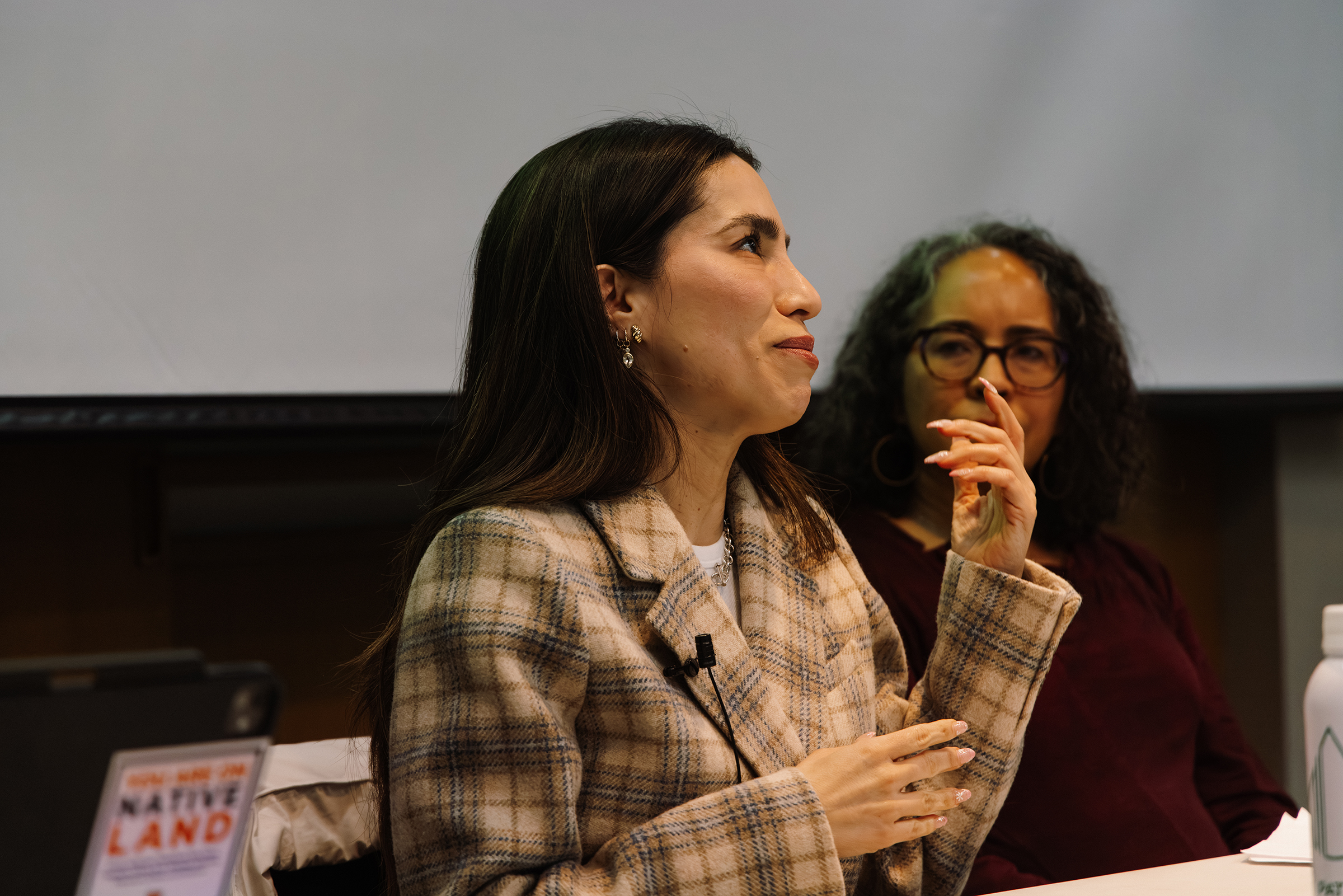 Canizales has been listening for six years: her research follows undocumented Maya youth in Los Angeles. Descendants of genocide survivors, who work 12- and 14-hour shifts in garment factories and warehouses, the kids show up on Friday nights between 6 and 8:30 to a support group in Pico Union and answer the question: “How was it?” Canizales calls what happens in those rooms future-making, which she defines as “the process of using material and symbolic resources, language, and the body to secure social, economic, and emotional futures as immigrants and teens transitioning into adulthood”. She does not call this work resilience, but kids teaching each other where to find better wages, how to get more hours, and where to rent is future-making in practice. In telling each other these things, witnessing becomes an act of love.
 Cultural anthropologist Dr. Gina Pérez, whose new book Sanctuary People documents faith-based organizing in Ohio under the first Trump administration, is interested in what it takes to change the heart of another. She argues that sanctuary people aren’t born, but are made through practice: showing up, through the accumulated weight of prior struggles that create what she calls “fertile ground”. In Lorain, Ohio, within the Diocese of Cleveland, parishioners drew on the martyrdom of four churchwomen murdered by Salvadoran police in 1980 to pressure their bishop toward physical sanctuary. He refused. A Vietnam veteran who served 25 years as Lorain’s police chief quietly trained his officers not to cooperate with ICE anyway, then got publicly humiliated at a diocesan meeting. He told the bishop that there are unjust laws that need to be challenged. This was a rebuke. The bishop did not change his position.
 Dr. Gilberto Rosas, who writes about state violence at the southern border, opened by citing the imprisoned Marxist, Antonio Gramsci: “(I am a) pessimist of the intellect, (but an) optimist of the will”. Gramsci organized from inside a fascist prison. It was a frame Rosas had earned. Near the end of his talk he carefully noted that the surveillance technology currently being tested in Gaza is the same technology contracted to ICE: the tactics used in Palestine are being used in Minnesota. Borders, he argued, are full of life. Borders are a form of mutual aid, people across the globe should co-mingle. What if we went back to a time when borders helped people cross?
When asked after the panel what keeps them going, all three used the same word: “calling.” “It bothers me when people say you should rest,” Canizales said, “because I don’t think of this as work. Who am I to waste all my capital not doing this?”
The Chicanx/e & Latinx/e Program’s ongoing lecture series, now in its 50th year at UW–Madison, hosted the “Migration, Resilience, and Community Building in Times of Crisis” panel.
Spring 2026 Newsletter
Dr. Gilberto Rosas, who writes about state violence at the southern border, opened by citing the imprisoned Marxist, Antonio Gramsci: “(I am a) pessimist of the intellect, (but an) optimist of the will”. Gramsci organized from inside a fascist prison. It was a frame Rosas had earned. Near the end of his talk he carefully noted that the surveillance technology currently being tested in Gaza is the same technology contracted to ICE: the tactics used in Palestine are being used in Minnesota. Borders, he argued, are full of life. Borders are a form of mutual aid, people across the globe should co-mingle. What if we went back to a time when borders helped people cross?
When asked after the panel what keeps them going, all three used the same word: “calling.” “It bothers me when people say you should rest,” Canizales said, “because I don’t think of this as work. Who am I to waste all my capital not doing this?”
The Chicanx/e & Latinx/e Program’s ongoing lecture series, now in its 50th year at UW–Madison, hosted the “Migration, Resilience, and Community Building in Times of Crisis” panel.
Spring 2026 Newsletter
Canizales has been listening for six years: her research follows undocumented Maya youth in Los Angeles. Descendants of genocide survivors, who work 12- and 14-hour shifts in garment factories and warehouses, the kids show up on Friday nights between 6 and 8:30 to a support group in Pico Union and answer the question: “How was it?” Canizales calls what happens in those rooms future-making, which she defines as “the process of using material and symbolic resources, language, and the body to secure social, economic, and emotional futures as immigrants and teens transitioning into adulthood”. She does not call this work resilience, but kids teaching each other where to find better wages, how to get more hours, and where to rent is future-making in practice. In telling each other these things, witnessing becomes an act of love.
Cultural anthropologist Dr. Gina Pérez, whose new book Sanctuary People documents faith-based organizing in Ohio under the first Trump administration, is interested in what it takes to change the heart of another. She argues that sanctuary people aren’t born, but are made through practice: showing up, through the accumulated weight of prior struggles that create what she calls “fertile ground”. In Lorain, Ohio, within the Diocese of Cleveland, parishioners drew on the martyrdom of four churchwomen murdered by Salvadoran police in 1980 to pressure their bishop toward physical sanctuary. He refused. A Vietnam veteran who served 25 years as Lorain’s police chief quietly trained his officers not to cooperate with ICE anyway, then got publicly humiliated at a diocesan meeting. He told the bishop that there are unjust laws that need to be challenged. This was a rebuke. The bishop did not change his position.
Dr. Gilberto Rosas, who writes about state violence at the southern border, opened by citing the imprisoned Marxist, Antonio Gramsci: “(I am a) pessimist of the intellect, (but an) optimist of the will”. Gramsci organized from inside a fascist prison. It was a frame Rosas had earned. Near the end of his talk he carefully noted that the surveillance technology currently being tested in Gaza is the same technology contracted to ICE: the tactics used in Palestine are being used in Minnesota. Borders, he argued, are full of life. Borders are a form of mutual aid, people across the globe should co-mingle. What if we went back to a time when borders helped people cross?
When asked after the panel what keeps them going, all three used the same word: “calling.” “It bothers me when people say you should rest,” Canizales said, “because I don’t think of this as work. Who am I to waste all my capital not doing this?”
The Chicanx/e & Latinx/e Program’s ongoing lecture series, now in its 50th year at UW–Madison, hosted the “Migration, Resilience, and Community Building in Times of Crisis” panel.
Spring 2026 Newsletter